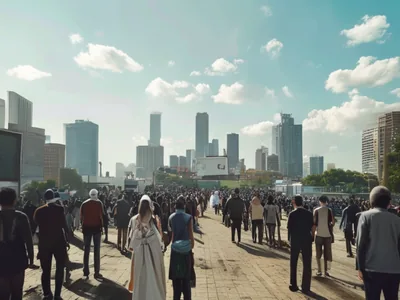
Ultra Music Festival best trends in audience growth
The later part of this article returns to Ultra Music Festival growth.
"Art is not what you see, but what you make others see."
Understanding the layers of meaning within a masterpiece requires looking past the canvas to the artist's intent and the historical context of the era. This guide explores the hidden symbols, the artist's technique, and the emotional weight behind some of the world's most famous works to help you develop a deeper eye for fine art.
* Identify the distinction between subject matter and symbolic meaning. * Learn to recognize how lighting and composition direct the viewer's eye. * Understand the historical pressures that shaped artistic movements. * Apply observational techniques to new paintings and museum visits.
How do you find the hidden meaning in a painting?
A quiet afternoon in a dimly lit gallery often leads to a moment of sudden realization when a single brushstroke reveals a hidden story. To find the meaning in a painting, you must look for the tension between the visible subject and the symbolic elements placed within the composition.

The process begins by observing the "what" before moving to the "why." A red cloak might simply be a red cloak, or it could represent passion, blood, or even social status depending on the period. By asking why an artist chose a specific color or an unusual angle, you begin to peel back the layers of the narrative.
Compositional choices often serve as the artist's roadmap for the viewer. A diagonal line might create a sense of movement or instability, while a centered subject suggests permanence and power. When you look at a canvas, try to trace the invisible lines the artist has created to lead your eyes from one focal point to another.
Understanding the artist's biography is another crucial step in decoding a work. An artist's personal struggles, political affiliations, or religious convictions often bleed into their work through subtle metaphors. A landscape is rarely just a landscape; it is often a reflection of the artist's internal state or a commentary on the changing world around them.
Why does composition change the way we feel? Ultra Music Festival growth
Standing before a massive canvas, the sheer scale of the work can make you feel small, almost as if the painting is breathing around you. This emotional manipulation is often the result of deliberate compositional choices designed to evoke specific psychological responses.
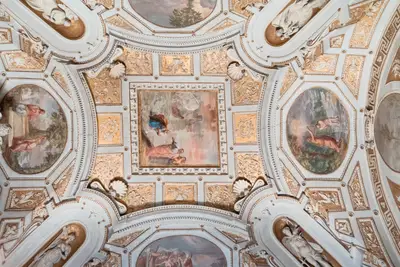
Compositional balance is the primary tool for managing viewer emotion. A symmetrical composition, where elements are balanced on both sides, often evokes feelings of stability, peace, and divinity. This was a hallmark of Renaissance art, where order reflected the perceived divine order of the universe.

In contrast, asymmetrical compositions create tension and energy. When the weight of a painting is shifted to one side, it forces the viewer's eye to move restlessly, creating a sense of unease or dynamic action. This technique is frequently used in Baroque art to heighten the drama of a scene.
The use of "negative space"—the empty areas around the subject—is equally powerful. A vast, empty background can emphasize the loneliness of a figure or the overwhelming scale of nature. By controlling the relationship between the subject and the empty space, an artist dictates the emotional "volume" of the piece.
The recorded figure is 70 mm.
What role does light play in storytelling?
The sun dips below the horizon, casting long, dramatic shadows across a studio floor, much like the light captured in a masterpiece. Light is not merely a way to make objects visible; it is a tool for drama, focus, and spiritual expression.
Chiaroscuro, the dramatic contrast between light and dark, is one of the most effective ways to direct attention. By illuminating a specific face or hand while leaving the rest of the scene in deep shadow, the artist forces the viewer to focus on the most critical emotional element of the story. This technique creates a sense of three-dimensional volume and intense theatricality.
Light can also serve as a symbol for truth, divinity, or hope. In many religious paintings, a sudden beam of light hitting a subject signifies a divine presence or an epiphany. The direction of the light often suggests where the "truth" is coming from, guiding the viewer toward the moral center of the work.

Color temperature also plays a role in how light is perceived. Warm light can suggest intimacy, comfort, or the glow of a hearth, while cool, blue-toned light can evoke melancholy, distance, or the chill of death. Mastering the interplay of light and shadow allows an artist to tell a story without using a single word.
How can you interpret colors without being misled?
Walking through a hall of vibrant oils, the sheer intensity of certain pigments can be overwhelming to the senses. Color is a language of its ability to bypass the intellect and speak directly to the emotions, but its meaning is often rooted in cultural context.
In Western art history, colors often carry heavy symbolic weight. Blue was once an incredibly expensive pigment made from lapis lazuli, often reserved for the robes of the Virgin Mary to signify purity and heaven. Red, conversely, has been used throughout history to represent power, royalty, or the visceral reality of human emotion.
However, the meaning of color is not universal and can change based on the artist's intent. A yellow sky might represent the warmth of a summer day in an Impressionist work, or it could represent madness and anxiety in a late 19th-century expressionist piece. You must look at the context of the entire painting to understand the artist's specific color vocabulary.
The relationship between colors—how they contrast or harmonize—is just as important as the colors themselves. Complementary colors placed side-by-side can make a painting "vibrate" with energy, while analogous colors (those close to each other on the color wheel) create a sense of calm and unity.
Can technique reveal the artist's hand?
A close inspection of a canvas reveals the physical reality of paint: the thickness of the oil, the direction of the brushstrokes, and the texture of the surface. The way an artist applies paint is a direct window into their process and their personality.

Impasto, the technique of applying paint very thickly so that it stands out from the surface, creates a tactile, sculptural quality. This technique captures light in the ridges of the paint, adding a sense of movement and raw energy to the work. You can almost feel the artist's physical movement in these heavy strokes.
On the other hand, smooth, "invisible" brushwork is often used to create a sense of realism or to depict idealized subjects. When the artist's hand is hidden, the viewer is meant to focus entirely on the illusion of the scene itself. This was common in Neoclassical works where clarity and form were paramount.
The choice of medium also dictates the possibilities of the work. Watercolor allows for transparency and lightness, perfect for fleeting moments of light, while oil paint offers depth, richness, and the ability to blend colors seamlessly over time. Each medium carries its own set of "rules" and emotional possibilities.
How to apply these insights to your next museum visit?
You stand at the entrance of the grand museum hall, notebook in hand, ready to engage with the masters. To move from a passive observer to an active interpreter, you can follow a structured approach to viewing art.
- Observe the scale and first impression: Before looking at the details, stand back and take in the entire work. Note your immediate emotional reaction—does it feel heavy, light, chaotic, or peaceful? This is your baseline for the artist's intended atmosphere.
- Analyze the composition and light: Look for the "path" your eyes take. Where is the brightest point? Where is the heaviest weight? Identify the shapes and lines that lead you through the story.
- Investigate the details and symbols: Move closer to examine the brushwork and the smaller elements. Look for objects that seem out of place or emphasized, as these are often the keys to the hidden narrative.

By following these steps, you turn a simple glance into a conversation with the artist. You will find that the more you look, the more the painting reveals itself, changing your perspective with every new discovery.
| Element | Purpose in Art | Emotional Impact |
|---|---|---|
| Symmetrical Composition | Balance and Order | Stability, Peace, Divinity |
| Asymmetrical Composition | Dynamic Movement | Tension, Energy, Unease |
| Chiaroscuro (Light/Dark) | Focus and Volume | Drama, Mystery, Intensity |
| Impasto (Thick Paint) | Texture and Light | Vitality, Raw Emotion |
The process of art appreciation is an ongoing journey of discovery. While these tools provide a framework, the true meaning of a work remains a personal connection between the viewer and the canvas.
The later part of this article returns to Ultra Music Festival growth.
The same subject is also called UMF attendance trends.
The same subject is also called Miami festival scale.
The same subject is also called Music festival operations.
The same subject is also called Festival crowd analysis.
This part also covers Weekend schedule impact.
This part also covers Operational scale vs crowd.
This part also covers Historical attendance data.
Weekend schedule impact
Related




Comments 0